3 mins read
Designed the planning workflow foundation now supporting 100+ treatment plans per month.
Role
Product Designer (Workflow & UX)
Timeline
Mar 2024 - May 2025
Skills
Product thinking
Workflow design
UX design
Background & context
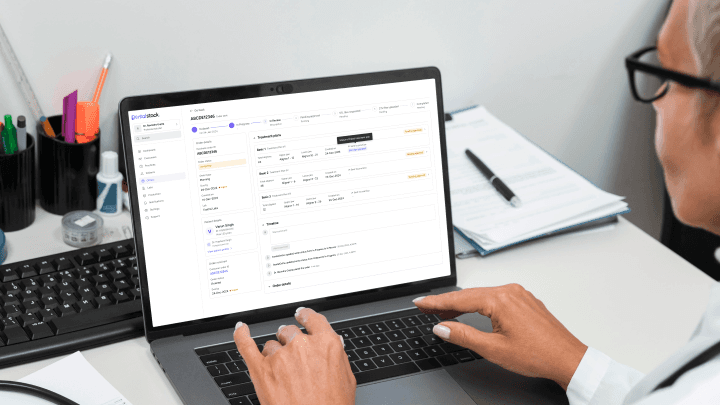
Dental Stack is a B2B platform connecting orthodontic clinics, aligner companies, and planning labs for aligner treatment planning.
At this stage, clinicians were already connected to aligner companies, with active planning orders in use. However, many aligner companies outsourced planning to external labs that were not part of the workflow. The challenge was to support this without disrupting existing clinician - aligner relationships.
Today, it has become the foundation that supports:
100+ aligner treatment plans
10+ planning labs
50+ clinicians
5+ aligner companies
Discovery inputs
This stage was informed by potential and existing ongoing customer conversations.
Across conversations with multiple aligner companies and planning labs, we could understand:
Aligner companies don't want to disclose connected clinician details to labs
Aligner companies remained accountable to clinicians
Planning labs needed operational independence post-plan-finalization
Clinicians should not see planning artifacts internal to aligner company
What needed to work
At a system level, the product needed to answer a few practical questions:
How can Aligner companies outsource work without losing control?
How do plans move cleanly from Lab → Aligner company → Clinician?
Who approves what, and when?
How do we avoid stale or conflicting plans?
How do we handle completion when two linked orders exist?
My approach
Instead of redesigning everything, I focused on extending the existing model carefully.
Introduced a second, linked order rather than a brand-new workflow
Used cloning instead of syncing to avoid accidental changes
Made approval and re-plan behavior explicit instead of automatic
Prioritized clarity of ownership over flexibility
We aimed to reflect the real-world workflow of the roles, not force a single “happy path.”
How the system works
Order Creation
Clinicians submit planning orders to their aligner company as usual
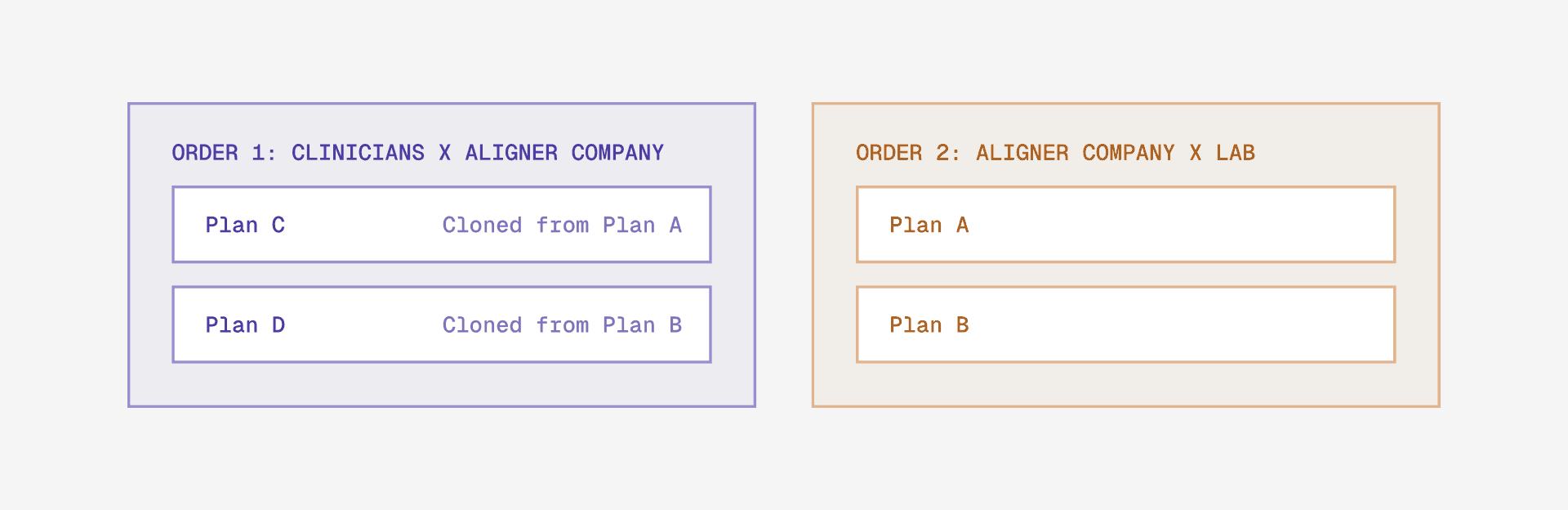
If planning is outsourced, the aligner company creates a linked lab order
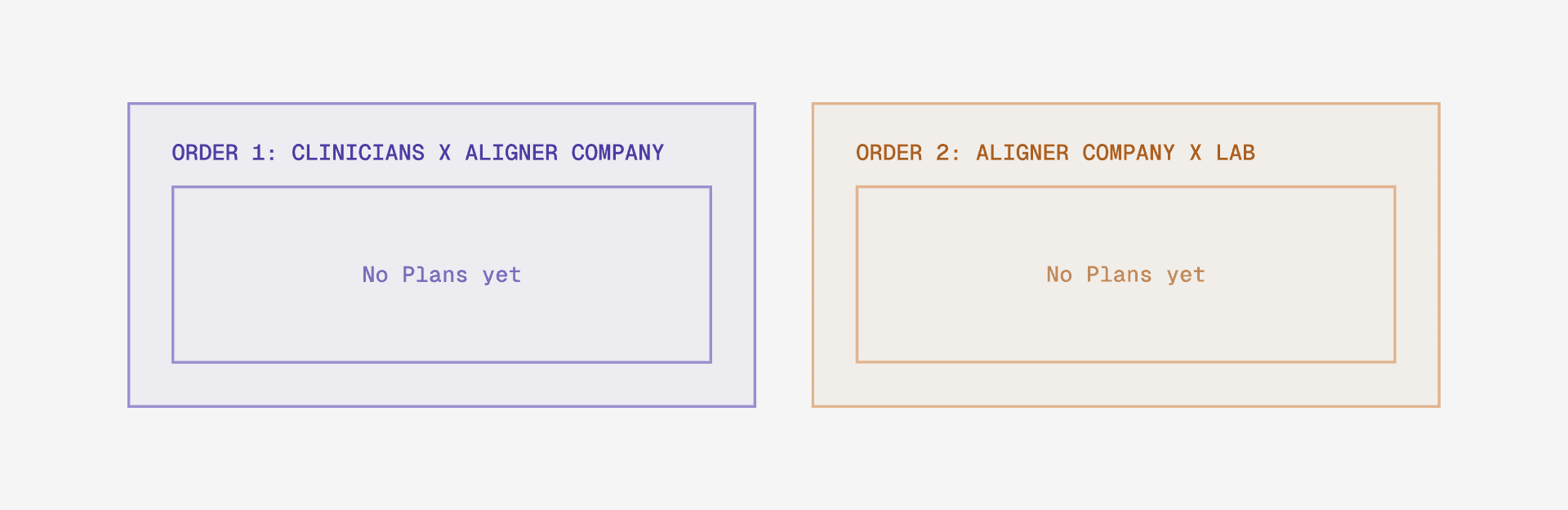
Plan creation and routing
Planning labs work only within their own order
Multiple treatment plans can be created
Internal planning files (e.g., STL files) remain confined to the lab order
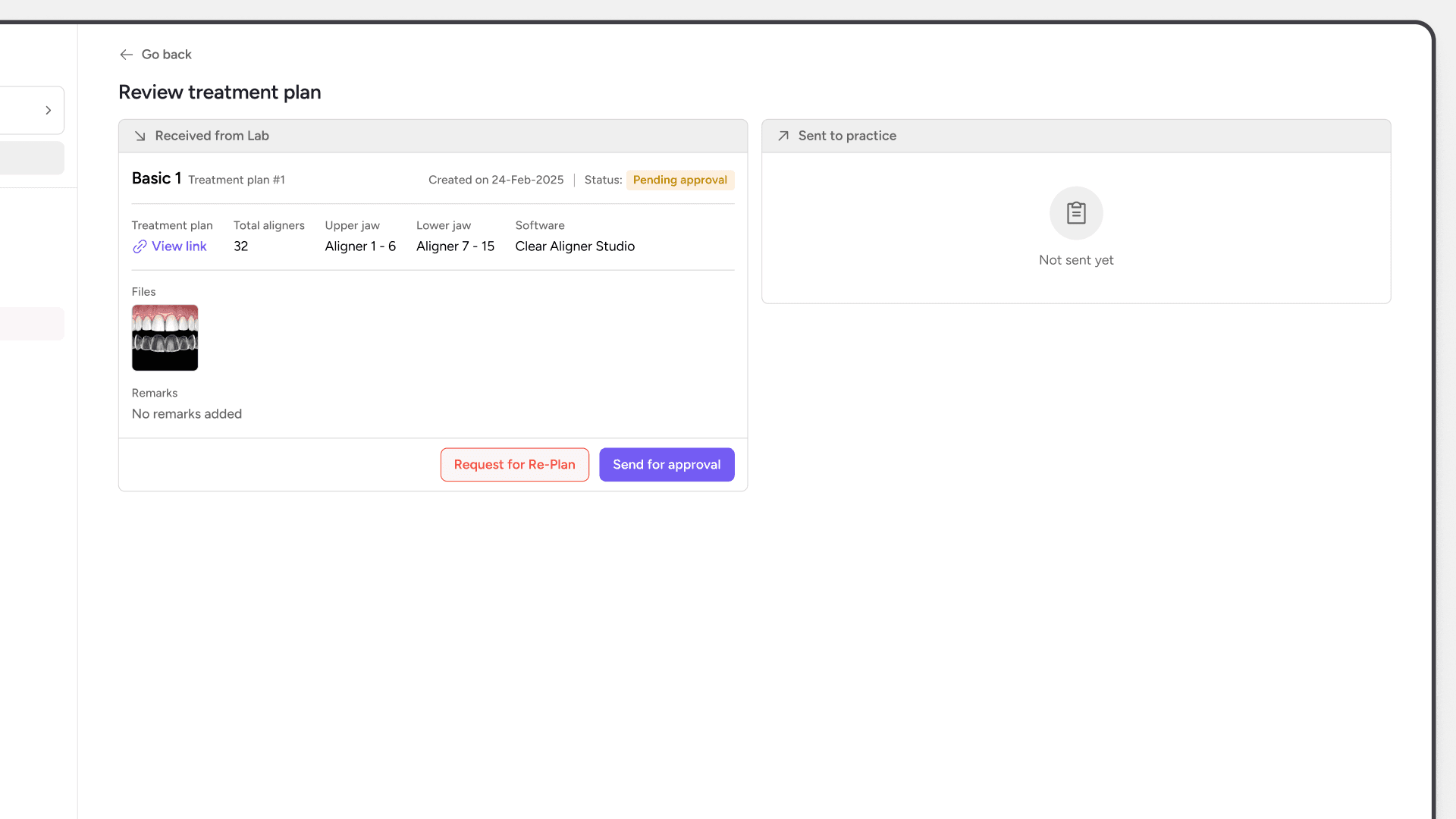
Treatment plan details - Aligner Company's view - before cloning plan
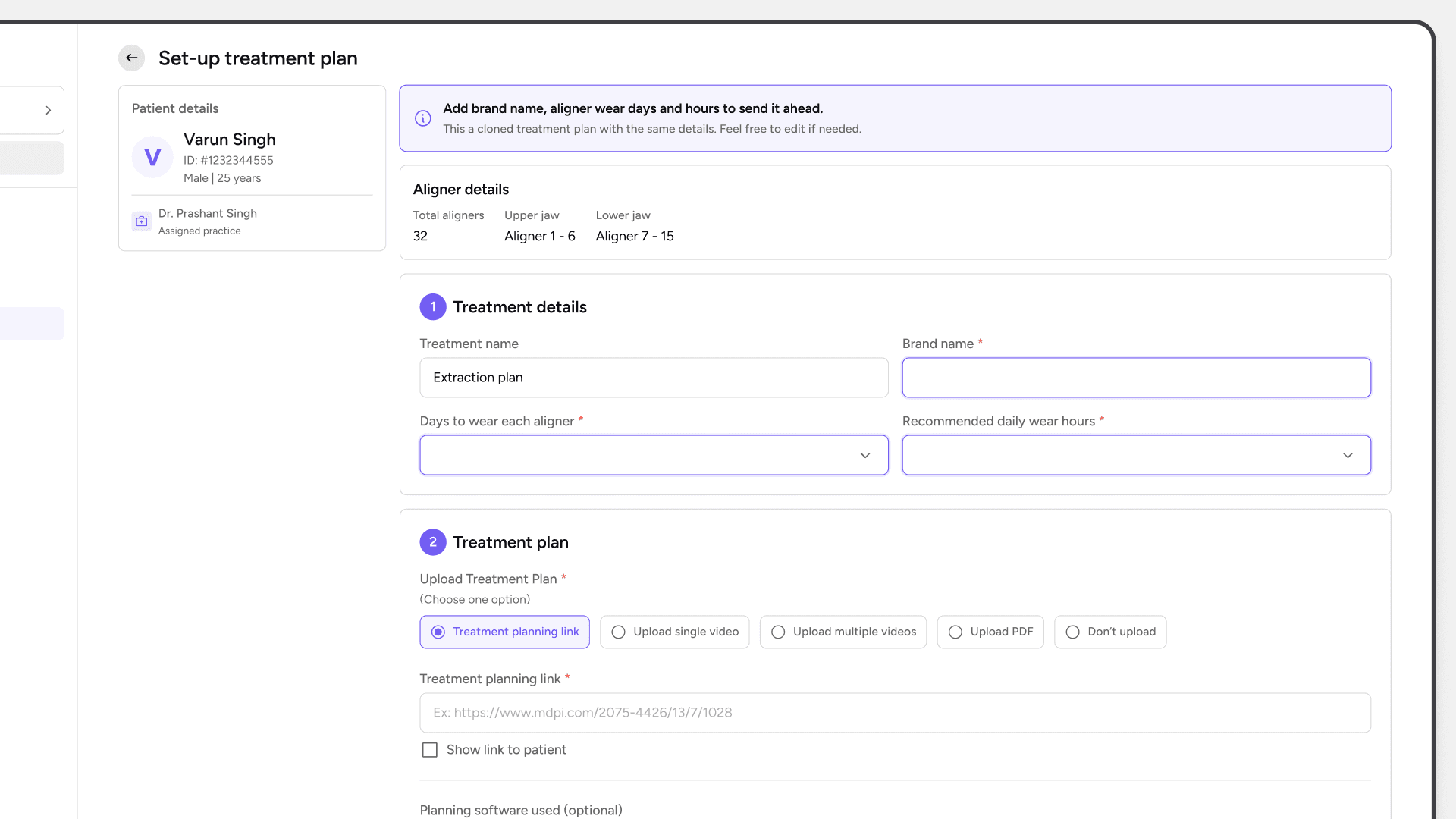
Aligner company cloning treatment plan
Review & control
Aligner companies review lab-created plans
Selected plans are cloned into the clinician-facing order
This ensures aligner companies retain ownership and accountability
Approval behavior
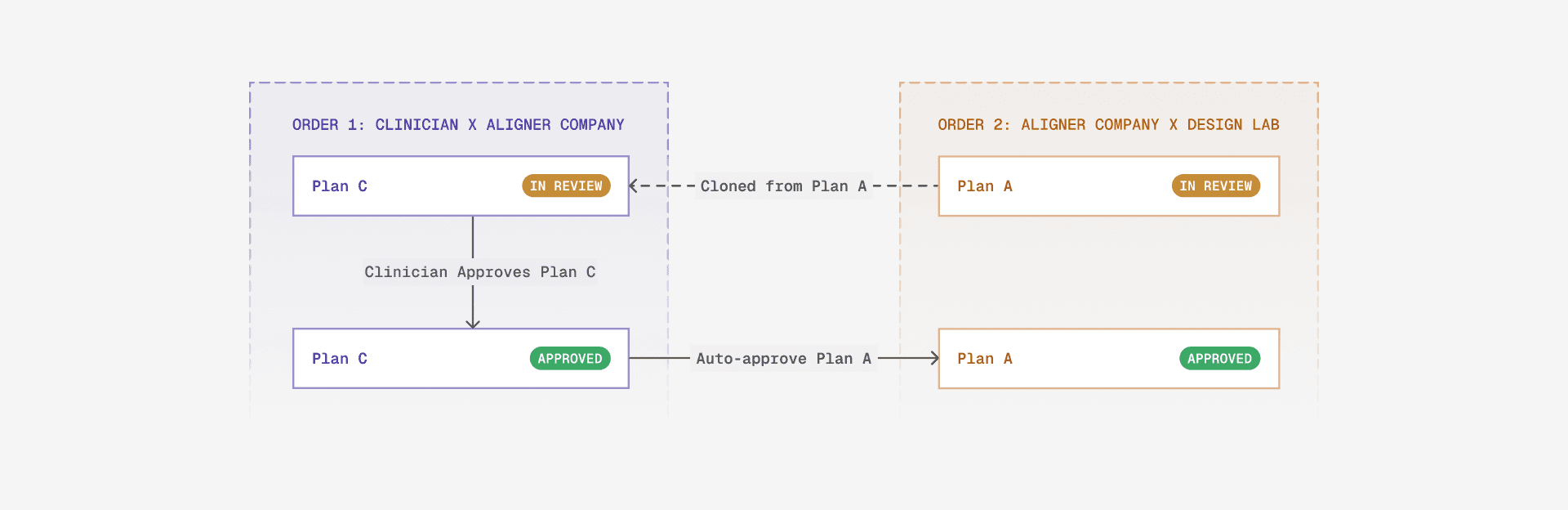
When a Clinician approves a plan sent by the Aligner company:
The corresponding plan from the Lab is automatically approved
Aligner company does not need to re-approve the same plan
This removes redundant steps while keeping responsibility clear.
Re-plan handling
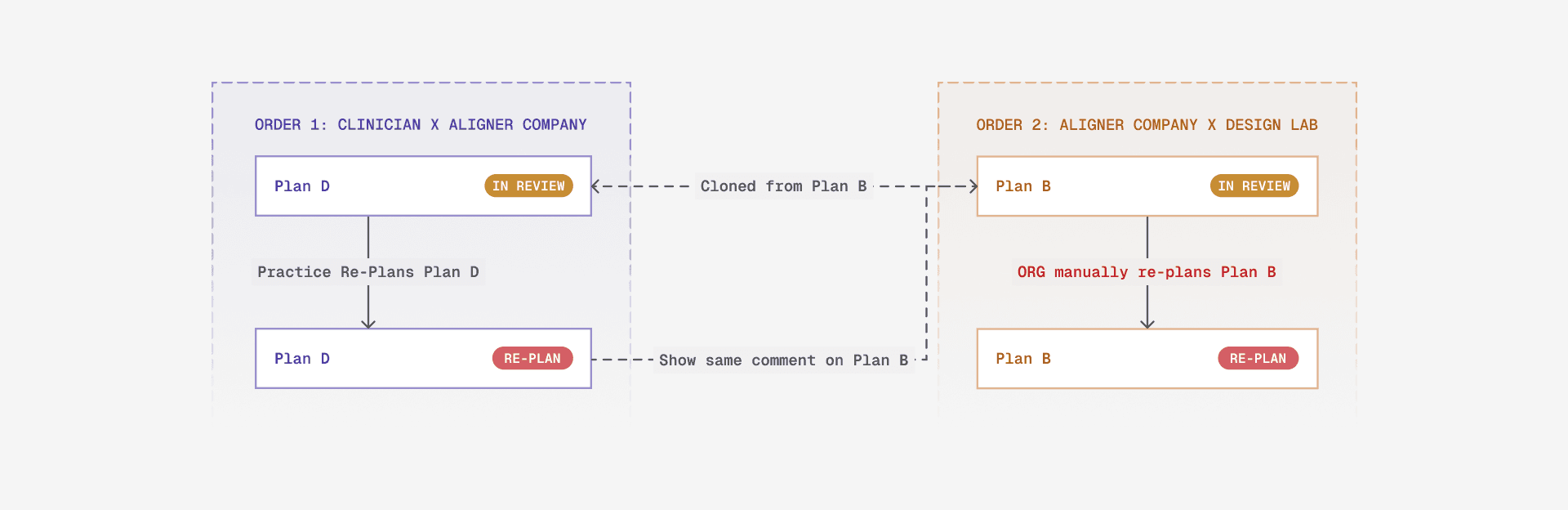
When a Clinician requests changes:
The request stops at the Aligner company first
The Aligner company can rewrite or refine the feedback
Only then is it sent to the Lab
This prevents vague or sensitive clinic feedback from reaching labs directly and keeps Aligner company in control of the relationship.
If a plan has already been sent to a Clinician and later re-planned by the Aligner company, the older plan is automatically archived on the Clinician side to avoid outdated approvals.
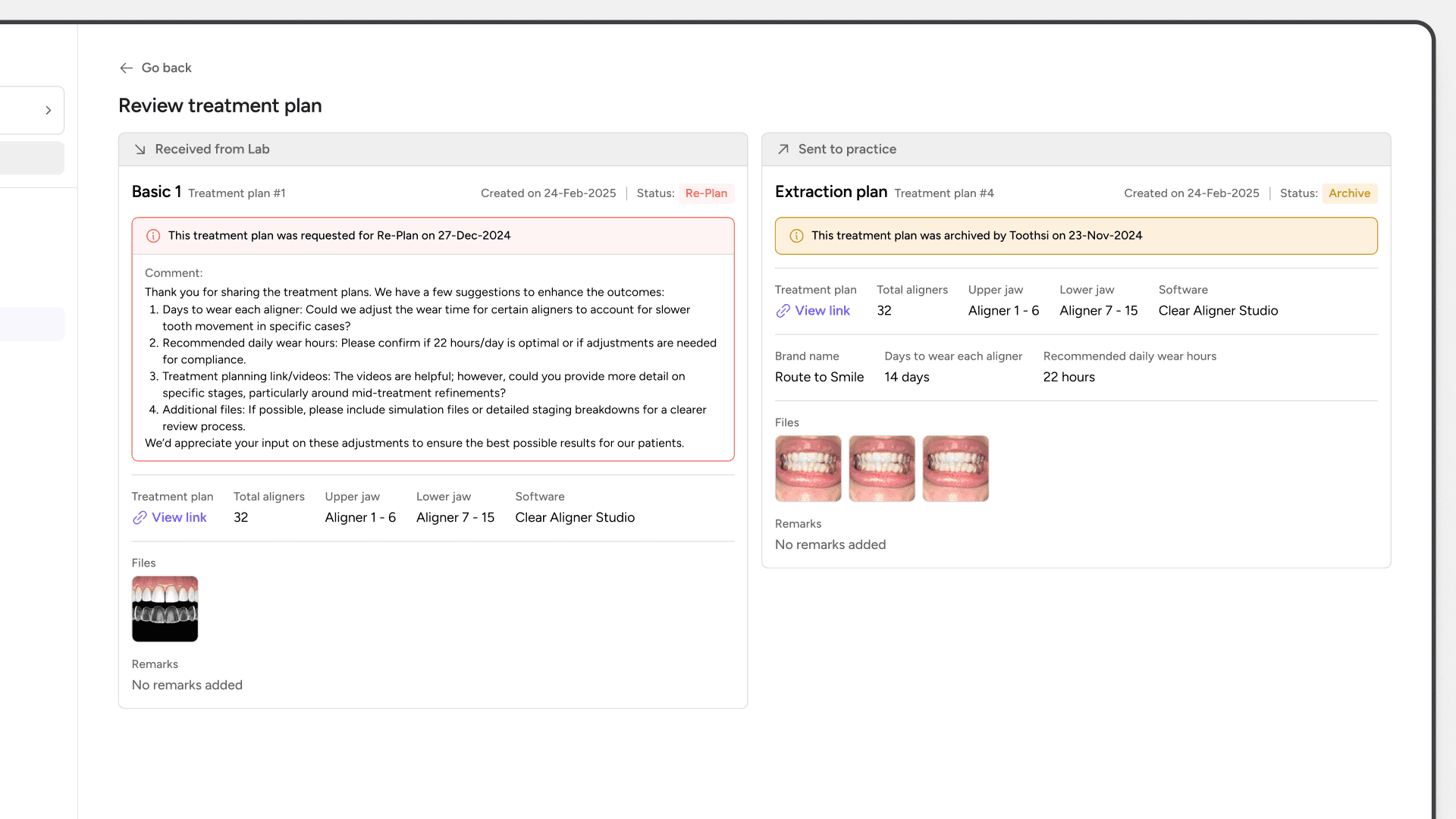
Treatment plan details - Aligner Company's view - after re-planning already sent plan
Key decisions and trade-offs
Order completion
With two linked orders, completion needed care.
When a Clinician finalizes a plan, Order 1 completes automatically
Order 2 remains open until the Lab finishes their work
Labs manually mark their order complete when ready
This keeps the clinic experience simple while allowing labs to work at their own pace.
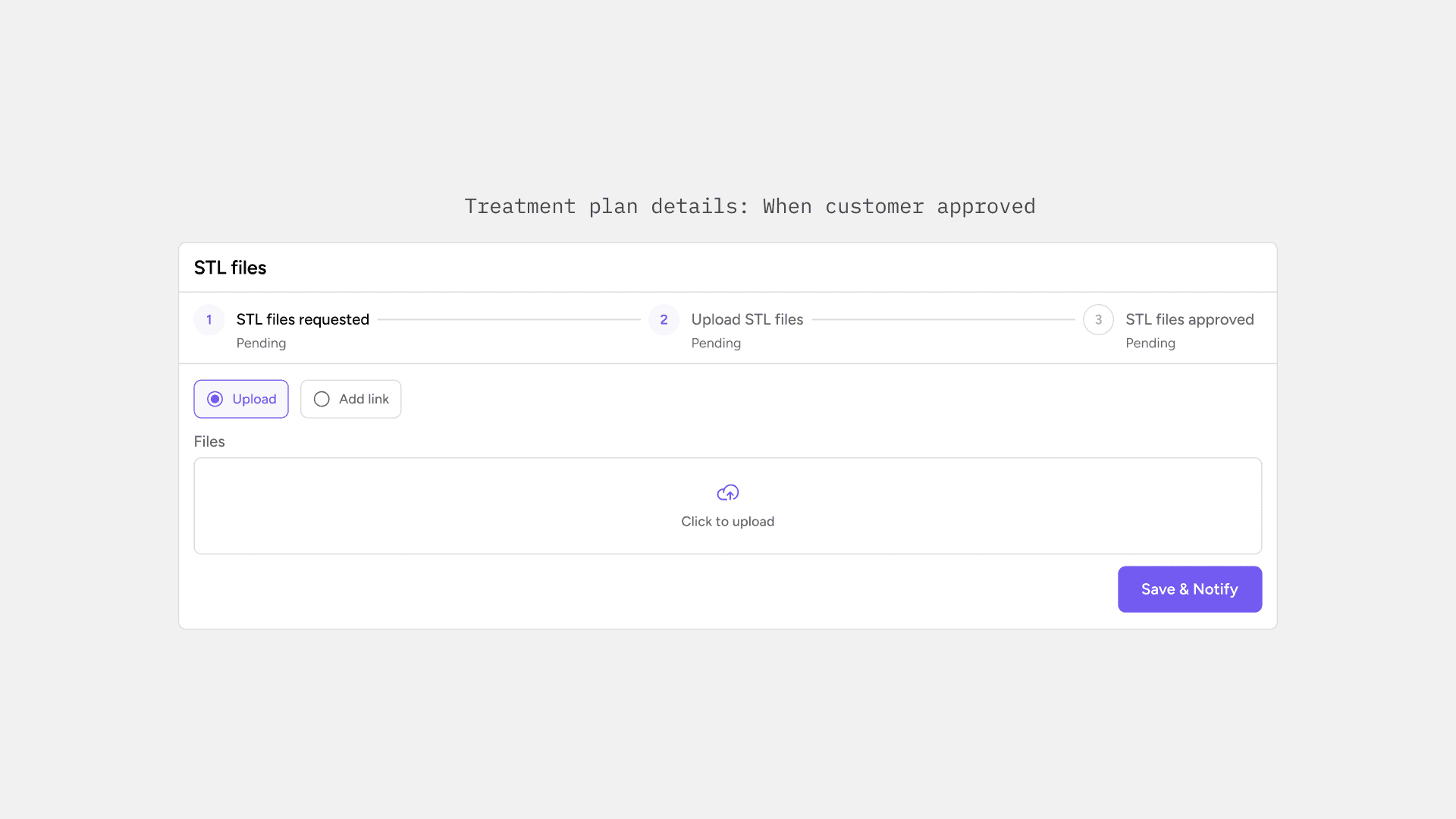
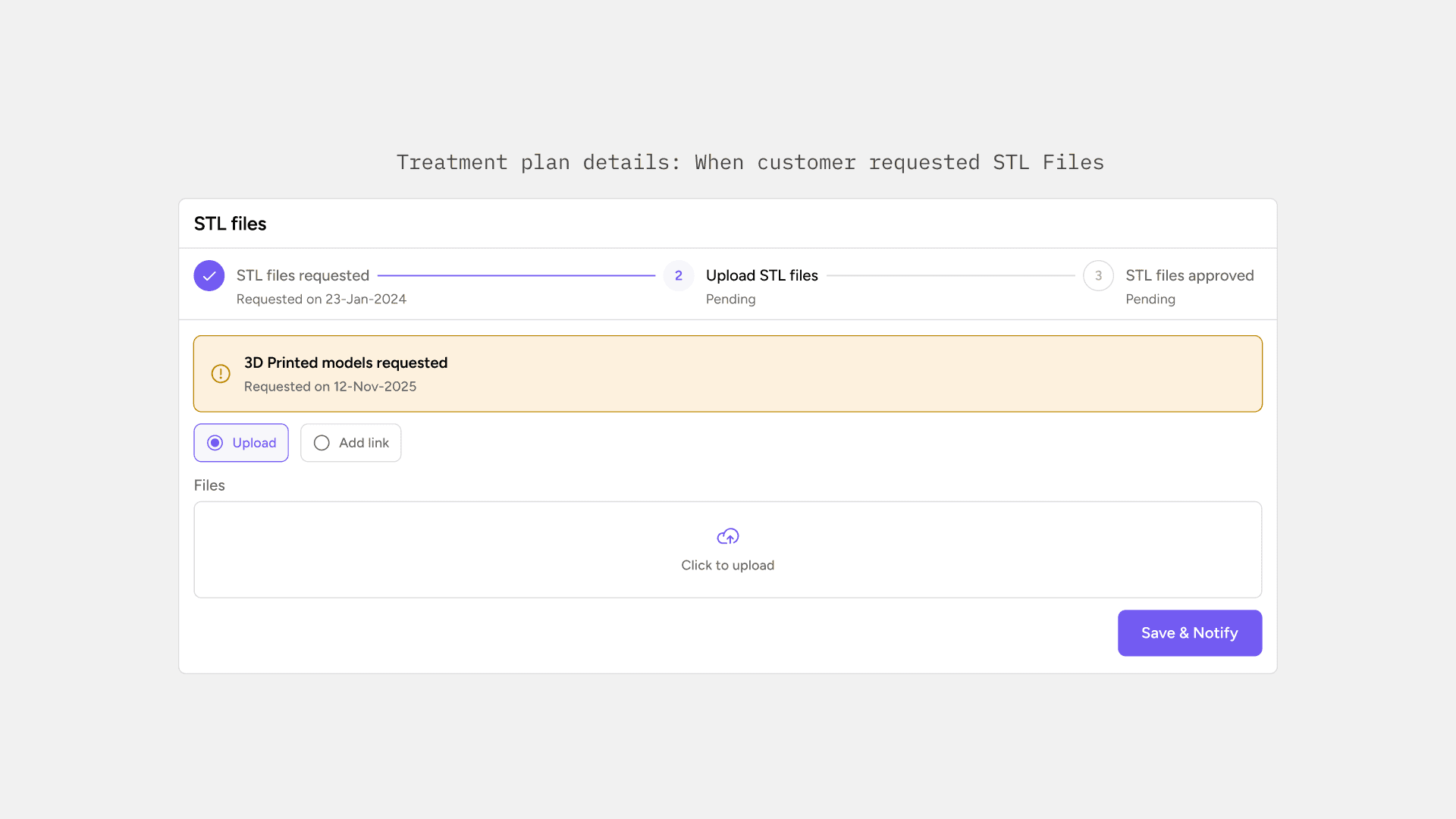
STL file access
Clinicians never see STL files
Aligner companies and Design Labs can access and upload STL files
File uploads stay open even after approval to support late corrections
This matches how labs work in the real world and avoids unnecessary re-requests.
Used cloning instead of syncing to avoid unintended updates
Kept re-plan requests manual to preserve context and control
Decoupled order completion to reflect real responsibilities
What I would do differently
Some workflow behaviors such as order status being linked to plan status but becoming independent after specific triggers only became clear after multiple deep discussions with engineering. In hindsight, I understand these transitions earlier with the dev team to reduce iteration later and align on system logic sooner.
Not all long discussions were equally effective. One focused 1-hour call unblocked major product decisions, while other 2–3 hour sessions added limited clarity. I’d collaborate in shorter, decision-focused sessions to reduce iteration and improve alignment.
Outcome & Adoption
Although this workflow was designed before the platform reached its current scale, it became a core part of the planning system.
Today, the platform supports:
100+
Aligner treatment plans / month
10+
Connected clinicians to aligner companies
~50
Clinicians managing active patients
20+
Clinicians, labs, and aligner companies
Other Projects
5 mins read
Sowpeace - Shopify E-commerce Website
2 min read